Translated by Charles Marcano
The purpose of this week’s exercise is quite simple: let’s examine the biggest gaps between DRA and other statistics to see if we discover any gems. Not familiar with DRA? Well, luckily, we have a whole page (including a brand new YouTube video!) on which DRA works. Well, maybe a little too much; The short version of DRA is that FIP is better. While FIP eliminates ERA’s defensive impact, DRA goes a step further, also separating the pitcher from the park’s factors and the quality of the opponent.
I took our Pitching Leaderboards, exported them, then added a few columns to break down the gaps between DRA and ERA/FIP, which you can find here. I know, that some work (applause please) is a kind of fancy spreadsheet. As the long offseason rolls around (both emotionally and perhaps in length), browse around those funny boards to your heart’s content. Both full-time and half-time numbers are included with our innings pitch for both requirements, but I’ll just focus on the full-time results. I began to talk about finding jewelry because this rudimentary analysis is like panning gold in a river. We’ll have to filter out a little bit of noise to find the gold, and the smaller average size only makes that process more difficult.
Let’s start with the biggest differences between DRA and ERA. This is a fairly classic exercise, often done with FIP, to see which pitchers have been “unlucky” compared to their actual performance on the mound. And with how focused fantasy teams can be when it comes to one of our top 10 rotation categories, it’s always valuable to see which pitchers fare the worst in terms of results. Before we get to the chart, a special mention goes to Mike Burrows, the only pitcher on the chart with the same DRA and ERA; 5.99 for all percent of your age marks earned, congratulations?
Come on, let’s see the top 10 names in the DRA/ERA gap (for a good reason);
| The name | Equipment | HE | WAS | DR | DRA – ERA | draw |
| Jack Perkins | ATH | 121 | 6.1 | 4.41 | -1.69 | 97 |
| Griffin Canning | SD | 88.2 | 5.68 | 4.25 | -1.43 | 93 |
| Kyle Freeland | Col | 135.1 | 6.65 | 5.41 | -1.24 | 119 |
| Tanner Gordon | Col | 103.2 | 6.68 | 5.44 | -1.24 | 120 |
| Gabriel Hughes | Col | 64 | 6.33 | 5.18 | -1.15 | 114 |
| Jack Kochanowicz | LAA | 64 | 6.19 | 5.05 | -1.14 | 111 |
| Michael Lorenzen | COL/TOR | 127.1 | 7.21 | 6.16 | -1.05 | 136 |
| Kyle Hart | SD | 64 | 4.92 | 3.95 | -0.97 | 87 |
| Andreas Painter | PHI | 126.2 | 5.40 | 4.46 | -0.94 | 98 |
| Brandon Sproat | A thousand | 97 | 5.57 | 4.64 | -0.93 | 102 |
Ah, I told you this like looking for gold in the river; It’s no coincidence that when it comes to ERA, four of the top 10 worst hitters have put up relative DRA for the Rockies — Coors Field remains undefeated. The same applies to the pad in Sacramento (sorry; Jack PerkinsI love you very much, but not your local stadium). But here are a trio of interesting names…
First, Brandon Sproat There is someone I love and who often appears when I analyze and write. Up next week in our search for Cam Schlittler’s next three fastball. Milwaukee’s right-hander throws seven pitches from our metric, including an absolutely foul-mouthed hitter who is listed at -1.4. StuffPro and -0.9 in * PitchPro. But the former Florida Gators player has struggled to tame his lineup, leaving a walk rate of 12.3% in 97 innings in MLB, barely better than his mark of 14.9% in 22 and 1/3 innings in Triple-A. And it’s no surprise to see why: When a pitcher turns the purple zone outside the box, things don’t look good. There is a lot of slander in Sproat’s right arm and he is in the right organization to use his talent, but as long as the results are showing on the field, it is a wide-round bet or name to have on the watch list.
Secondly; Andreas Painter In part, it stands out that the pitching in front of the Phillies’ 2026 defense, which produced a total of -16.5 DRP (third-worst in MLB), should have been suitable for the young right-hander to make a good decision. A .305 BABIP may have diluted his overall profile during the season. After being released in June, the 23-year-old made mechanical adjustments that paid off in the second half, including a 3.65 ERA, 1.15 ERA and 24.5% strikeout rate over 61 and 2/3 innings, good for 84 DRA. still dictates his ceiling, the catch will be worth everything when it comes to Painter, but at that time Braxton Ashcraft can be selected as the fifth starter, but producing the number two or three.
We will wait until we talk about the third name, which I am sure you have already seen in the diagram, which also appears in the following. Here are the 10 biggest gaps (again in a good way) between DRA and FIP;
| The name | Equipment | HE | DR | FIP | DRA – FIP | draw |
| James Taillon | CHC/TOR | 86 | 5.71 | 6.64 | -0.93 | 125 |
| Milo Mikolas | WSH | 116 | 5.06 | 5.83 | -0.77 | 111 |
| Brandon Sproat | A thousand | 97 | 4.64 | 5.27 | -0.63 | 102 |
| JR Ritchie | ATL | 73.1 | 5.00 | 5.61 | -0.61 | 110 |
| Griffin Canning | SD | 88.2 | 4.25 | 4.8 | -0.55 | 93 |
| Aaron Nola | PHI | 175.1 | 4.39 | 4.93 | -0.54 | 97 |
| Mr. Brad | WSH | 83.1 | 3.82 | 4.35 | -0.53 | 84 |
| Javier Assad | CHC | 94.1 | 4.51 | 4.98 | -0.47 | 99 |
| Nathan Eovaldi | TEX | 145.2 | 3.72 | 4.13 | -0.41 | 82 |
| Edward Cabrera | CHC | 80 | 5.06 | 5.41 | -0.35 | 111 |
Hello again, Brandon Sproat. And the Blue Jays applied the same process to their acquisitions in the season Michael Lorenzen y* James Taillon? Or panning for gold? Part of this rudimentary practice is that it welcomes games like Taillon, Mikolas, and Ritchie, where their merit meters break almost full life, but it doesn’t help much when the DRA starts with five.
But to that third name…Griffin Alexander Canning, Mission Viejo, California. A nasty tear in his Achilles tendon ruined a more than acceptable start to his 2025 season, in which he had a respectable 3.77 ERA in 76 and 1/3 innings against the Mets with an additional seven in 16 starts. The 30-year-old pitcher signed a one-year contract to join the Padres in February, but didn’t see MLB action until May because of an Achilles injury. Things didn’t go well for him until the All-Star break, leaving him with a horrendous 6.67 ERA, 1.62 ERA and 10.2% K-BB in 59 and 1/3 innings.
San Diego sent Canning to the bullpen, where he found success starting on August 1 with a 3.04 ERA, a 49.3% ground ball and a 90 DRA- in 14 relief appearances over 23 2/3 innings. He had a solid 1.39 ERA, but he didn’t get any help behind him, as evidenced by his .319 BABIP, while finishing with solid contact with a 2.8% Barrel Rate and 36.6% HardHit Rate. In that span, our pitching metric loved Canning, with three pitches (curveball, pitch and slider) from his repertoire of seven positive pitches in each rating. StuffPro as in PitchPro. I know, this was all a relief gig, but that Angels player often worked multiple innings, and it’s easy to attribute some of his early 2026 performance to getting back into shape following an Achilles injury. Canning, who is due to become a free agent (a mutual option with the Padres that will almost certainly be declined soon), will offer an attractive back-of-the-roll option; He enters 2027 as a late-round bet or player on my list, like Sproat.
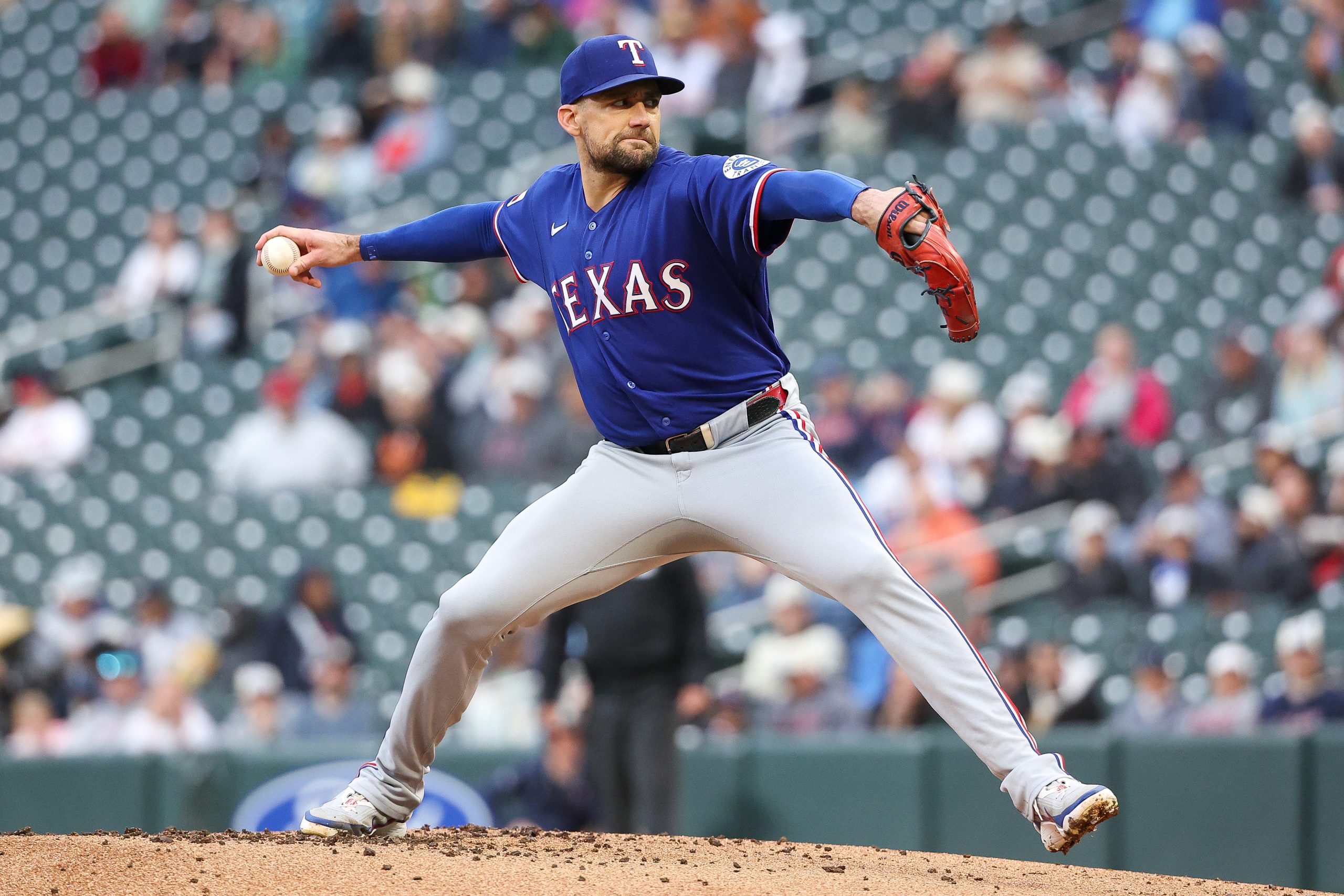
Finally, I can never leave you; Nathan Eovaldi. The seasoned veteran from Texas always ends up in the top of my fantasy teams, and this is further proof why. #Evo4Eva
The post ’26 Starting Round: DRA friendly appeared first on Baseball Prospectus.