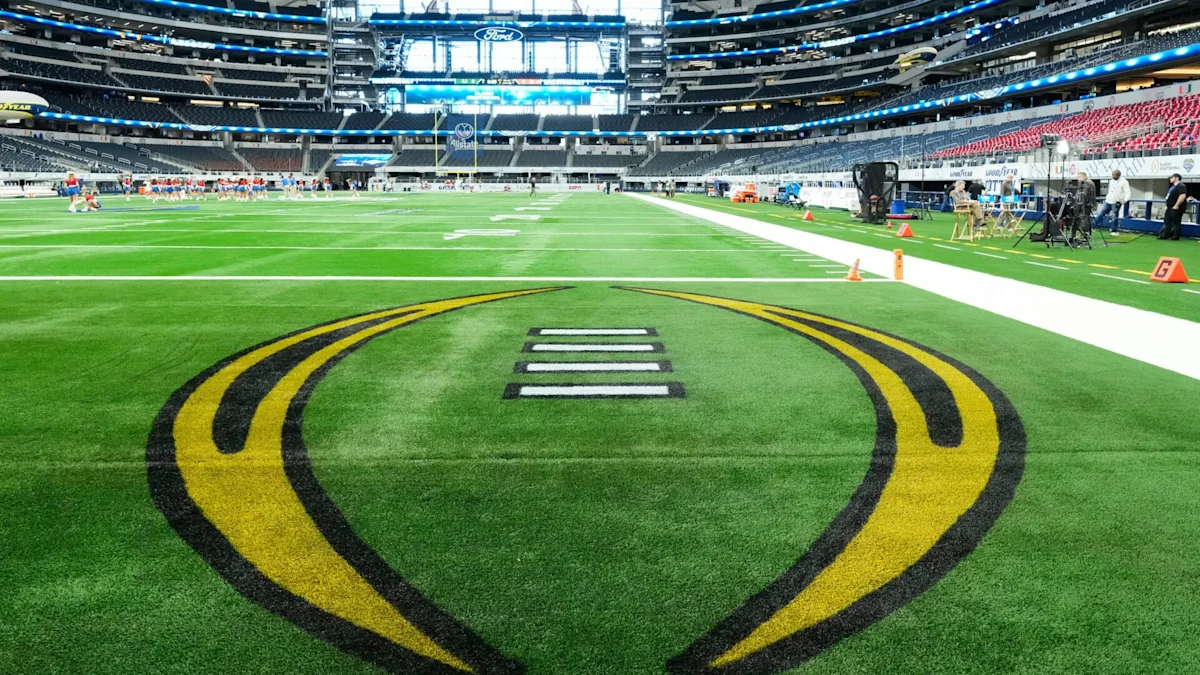
College football stadiums just feel different after dark. When the sun goes down and the stadium lights come on, the whole place changes. The crowd gets wilder, and the field starts to feel a little eerie. Some places are scary because of real history, while others have built unknown stories of fantasy over the years.
A few of these stadiums sit next to old cemeteries, have names that sound straight out of a horror movie, or have real tragedies tied to the land. When tens of thousands of screaming fans show up on Saturday night, those creepy vibes only get more powerful.
Advertisement
MORE: 5 global kickoffs and how they fit into college’s all-time legacy?
To be fair, not every stadium is involved here. Some just have a dark past, others are simply afraid to play in what fans are so big on. LSU’s Tiger Stadium, for example, once got so loud that a happy monitor actually showed an earthquake.
Here are six college football stadiums known for their creepy locations, spooky settings and frequent night games.
6. Florida’s Ben Hill Stadium Griffin, The Swamp
A general view from 50 yards west of Ben Hill Griffin Stadium before a game between the Florida Gators and the South Carolina Gamecocks. Credit: IMAGE IMAGES via Reuters Connect (Reuters)
Florida’s Ben Hill Griffin Stadium lives up to its reputation as a nickname and atmosphere around home games. The venue’s nickname, The Swamp, was coined by head coach Steve Spurrier in 1992. Spurrier, who explored the idea with longtime sports information director Norm Carlson, pointed out that the swamp is where the Gators live, and the name quickly became part of the team’s identity.
Advertisement
The stadium’s famous tagline “Only the Gators Live” adds to the terror of its image. He suggests that visiting teams in Gaiesville face a tough task, especially when the home crowd is involved.
With an official capacity of 88,548, the venue can hold a huge crowd. His season attendance record stands at 90,916, set in 2015 against rival Florida State, which slightly edged out the previous record of 90,907 in the 2009 season.
There is no proven attendance or benefit of the night game behind its reputation. The swamp acquires its place through characters and psychological pressures rather than ghost stories.
5. Virginia Tech’s Lane Stadium

A view of the stadium during halftime of the game between the Virginia Tech Hokies and the Pittsburgh Panthers at Lane Stadium. Credit: USA TODAY Sports (Reuters)
Lane Stadium in Blacksburg, Va., is best known for its sound. The tradition of entering the field to Metallica’s “Enter the Sandman” began on August 27, 2000. Since then, the song has become one of college football’s most recognizable entrance traditions.
Advertisement
When the music starts, thousands of fans jump and cheer together. The noise and movement of the entrance feel more intense, especially at night games.
Metallica brought the tradition full circle on May 7, 2025, when the band performed at the stadium. More than 66,000 fans attended, intending to perform the first song in the venue live Psallebat.
Stadium Lane on Oct. 2 It opened in 1965 and has a capacity of 65,632. The Old Dominion columnist called the game one of the most feared games before September 2025, even though Virginia Tech is 0-2 on the season. That opinion, not a measured discovery.
He insists that his troops remain lores on the Richter scale. No comparable seismic record has been verified.
Advertisement
MORE: 6 college football programs most likely to make their first CFP appearance in 2026
4. Alabama’s Bryant-Denny Stadium

A general view of the Alabama Crimson Tide’s game against the Middle Tennessee Blue Raiders during the first quarter at Bryant-Denny Stadium. Credit: USA TODAY Sports via Reuters Connect (Reuters)
Bryant-Denny Stadium in Tuscaloosa, Ala., has a cool legend attached to the cemetery across the street. According to legend, local coroner Rufus Strickland bought the family’s plot in Evergreen Cemetery to support Alabama forever.
Legend has it that he moved his wife’s body to make room for himself between her grave and the Purple Tide. Its stone reportedly bears a friendly greeting to visitors: “Hello. Thanks for the break.”
The stadium itself holds 100,077 fans, according to athletic director Greg Byrne, who has overseen $107 million in renovations. The field he plays on is named Saban Field, making a full venue named Saban Field at Bryant-Denny Stadium.
Advertisement
Alabama also pursued premium-seat upgrades. The first two steps from the 2025 initiative were preceded by university staff. A separate claim about a $175 million expansion to about 121,000 seats has not been confirmed.
The story of the cemetery gives this venue a surviving edge. The night of his time changed the reputation, the atmosphere, and the fact that the legend is more reliable than verified.
3. Clemson Memorial Stadium, Death Valley

NA general view of Clemson Memorial Stadium during the game between the Clemson Tigers and the Wofford Terriers. Mandatory Credit: Adam Hagy-USA TODAY Sports (Reuters)
Clemson Memorial Stadium has an eerie setting that combines a cemetery, a famous nickname and one of college football’s most well-known rituals. Stadium on September 19 It was opened in 1942 next to Woodland Cemetery.
Advertisement
Part of the Presbyterian venue was “Death Valley” in 1948. Clemson coach Frank Howard began using the nickname in the 1950s, and it soon became popular.
Another notable feature of the stadium is the Howard Rock. The white flint comes from Death Valley, Calif. on the hill was discovered on the 24th of Sept. 1966. The players rub before the hill, a ritual associated with supposed mystical powers. The delivery was made after 23 Sept. 1967, game against Wake Forest.
Broadcaster Brent Musburger is famously said to be running the hill for “25 seconds in college football.”
Clemson’s official capacity is 81,500. His football concert attendance stands at 86,092 in 1999. In May 2026, a George Strait concert drew 90,037 people, the overall stadium attendance record.
Advertisement
There is no verified memory of that night which explains his report. The cemetery, the name and the pregame ritual make it a memorable setting.
2. Wisconsin Camp Randall Stadium

A general view of Randall Field Stadium during the game between the Alabama Tide Crimson and the Wisconsin Badgers. Credit: USA TODAY Sports via Reuters Connect (Reuters)
Camp Randall Stadium in Madison, Wis., has a history that goes far beyond football. During the Civil War, he served as a Union camp. After the Union victory in April 1862, the site received more than 1,000 Confederate prisoners.
Historic Madison puts the number at over 1,300. Prisoners were held there between April and June 1862 and about 140 died. Many moved into the prison hospital and were buried in a mass grave at what is now Confederate Rest in Forest Hill Cemetery. Also, about seventy thousand Wisconsin soldiers were assembled in camp during the war.
Advertisement
That story forms the basis for the ghost story of the stadium. Some of the tailors reported seeing Confederate soldiers in their old clothes, with bows and sashes, going around in the mornings to the cold game.
These procedures remain unchanged, and the reported sightings are not associated with a specific nighttime game. However, real history makes the stories darker.
Randall’s camp holds 76,030 fans. Its capacity was 80,321 from 2005 through 2021, before renovations completed in the summer of 2022 reduced the figure.
MORE: 5 college football coaches on the hot seat in 2026
1. UNC’s Tiger Stadium, Death Valley

A general view of the opening kickoffs between the Arkansas Razorbacks and the LSU Tigers at Tiger Stadium. Credit: USA TODAY Sports (Reuters)
LSU Tiger Stadium in Baton Rouge has one of college football’s most famous crowd noise stories. During a 1988 game against fourth-ranked Auburn, LSU went on fourth-and-10 before completing a touchdown pass. The Tigers won 7-6 in front of 79,431 fans.
Advertisement
The shock wave was so great that the seismograph recorded a shock of about 1,000 feet. Tiger Stadium provides evidence of a link between football noise and ground motion.
His nickname, Death Valley, came later. Fans began using them after LSU beat Clemson 7-0 in the Sugar Bowl on New Year’s Day 1959, en route to the national title.
Night games helped build the stadium’s reputation. LSU played its first night game in 1931, beating Spring Hill 35-0. According to LSU’s own statistics, the Tigers have gone 284-72-4 at night since 1958, with a .794 winning percentage. Their record over that span is 50-28-3, or .636. Since 2000, LSU has gone 112-15 in Saturday night games, an .882 winning rate.
The stadium holds 102,321 fans. In 2026, UNC opened against Clemson and won 51-10. Alabama visits on Nov. 7 followed by Texas on Nov. 14. It will be the first time Texas has visited Tiger Stadium since 1953.
Advertisement
Even with that caveat, Tiger Stadium has the strongest combination of content and atmosphere on this list. Its late kickoffs, massive crowds and seismic reactions make Death Valley a fitting choice for college football’s spookiest stadium.
– Enjoy free coverage of top news & trending stories with The Big Lead Newsletter –