 Skip to content
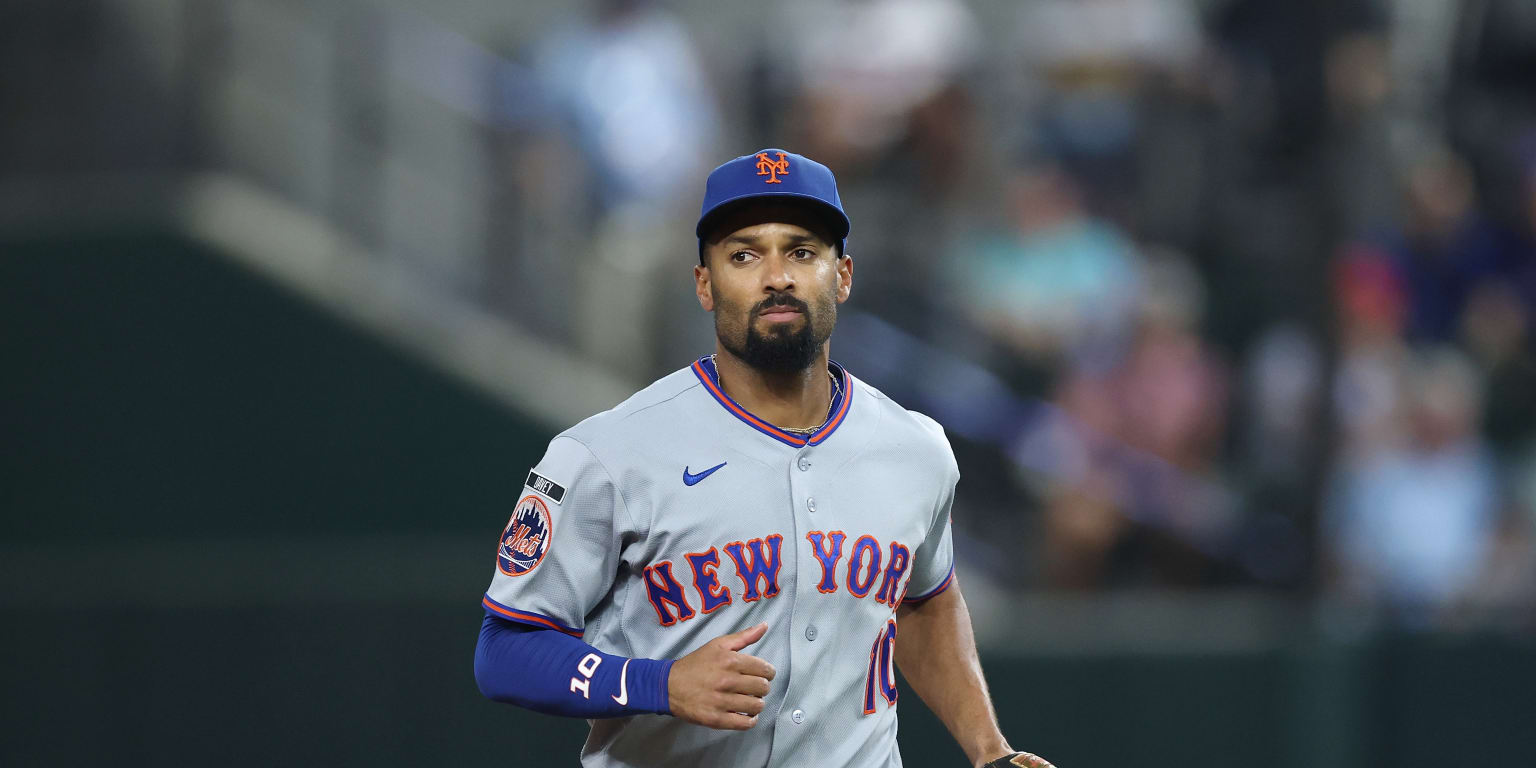
LAS VEGAS – Last season, Mets second basemen combined to produce a .629 OPS, which ranked 26th in the Majors, ahead of only the Orioles, Angels, Reds and Nationals.
President of baseball operations David Stearns doesn’t expect to make any major changes at the position this winter. However, he expects his second basemen to be more productive in 2027.
“It’s not a specific position we’re looking to add right now,” Stearns said at the General Managers Meeting this week.
At least some of Stearns’ optimism comes from the fact that he believes Marcus Semien can be better at 36 than he was at 35. Last year, Semien ranked 134th among 135 major league hitters in OPS (.620), 131st in on-base percentage (.280.) and (.232.)). For Semien, it was an exacerbation of a multi-year slump. Since the start of 2025, 118 players have accumulated at least 1,000 plate appearances. Among that group, Semien ranks 117th in OPS (.644).
Defensively, Semien has gone from a Gold Glove-caliber second baseman in 2024 to below-average this year. From ’24 to ’25, he regressed in almost every aspect of his game. At 25-26, Semien did it again, which is not unusual for players his age. Over the past 10 seasons, only 12 players age 36 or older have had at least 50 plate appearances with a league average OPS+ or better.
History is against Semien’s desire to be next.
Still, Stearns said, “This is an extremely motivated player who works as hard as anyone, believes in his ability, and is going to get everything he has.”
Semien is under a guaranteed contract for two more seasons and $46 million, giving the Mets significant incentive to squeeze his production.
“The corrections are not easy,” Stearns said. “We’ll see where we go in Spring Training and as we get into the season, but we’re not ready to close the door. [Semien].”
Another reason the Mets feel comfortable standing at second base is Brett Baty, who appeared in 25 games there in 2026 and has been adept defensively while complementing the right-handed Semien as a lefty. With Bo Bichette back at third, the Mets have a world of use with Baty and Semien at second base. While Semien also didn’t have a strong season against lefties, his OPS was at least 46 points higher than that of southpaws.
More than anything, Semien and Baty give the Mets a second veteran base while they wait for their prospects to develop. Stearns has often noted in the past that top teams tend to keep room open for young players to contribute, as they did in the outfield this year for Carson Benge and AJ Ewing. Heading into 2027, the farm system looks as deep at second base as at any position.
After the Mets’ Trade Deadline sale, the crown jewel of their farm is now Jefferson Rojas, their highest-rated prospect and the 68th prospect in MLB Pipeline’s Top 100. After struggling to finish a long season in the Dominican Winter League, he could have some pretty big competition next spring. If nothing else, he’s a solid bet to break into the second base equation by midseason.
“How close is it? He’ll tell us,” Stearns said. “He’s had a great second half of the year since we got him. He’s been playing winter ball and doing really well. Another guy we’re excited to see in camp and he’ll let us know when he’s ready.”
In addition to Rojas, Mitch Voit, the No. 4 prospect, and Emilien Pitre, the No. 10 prospect, also appear as players who could help in the first half of 2027. Voit, the team’s first-round Draft pick last year, has the higher ceiling of the two, but has yet to play above Double-A Binghamton. Pitre, one of the returning pieces in the Freddy Peralta trade, could be ready to crack the Majors sooner.
So, rather than relying solely on Semien, the Mets are working on the idea that some combination of Semien, Baty, Rojas, Voit and Pitre in 2027 could help them.